A hot tub changes how a home feels. The evening slows. The shoulders drop. Friends stay longer, and winter stops feeling like a season to endure. If you are scanning for a hot tub for sale and trying to tell one glossy shell from another, the brand names start to blur. Jets, pumps, seats, “hydrotherapy zones,” Bluetooth, waterfall lights, warranties that sound the same until you read the footnotes — it’s a lot. I’ve sat in dozens of tubs over the years, installed and serviced a few, and learned which claims matter once the cover closes and the heater starts drawing power. This guide isn’t a beauty pageant of marketing terms. It’s a practical comparison of the brands you’ll actually find, with judgment on performance, ownership cost, and small details that make or break the experience.
What really separates brands once the bubbles stop
The first soak in a showroom can be misleading. Lighting is perfect, salespeople say the right words, and the water is always clean. Ownership reveals the truth. Four things usually separate the brands that delight from the brands that disappoint after Swim and Spas two winters.
Hydrotherapy quality comes from jet placement, not jet count. Thirty mediocre jets blast your skin, but six well-designed jets knead deep muscle without sandblasting your shoulders. Look for varied jet sizes and angles, and for a seat layout that makes sense for different heights. Ideally, each occupant has something useful aimed at a real muscle group: lumbar, glutes, feet, calves, mid-back.
Insulation and efficiency show up on your power bill around month two. Full-foam insulation keeps heat in and makes the cabinet more rigid. Thermal-pane designs, where the cabinet air is used as an insulating layer, can be efficient if executed well, but they vary widely. A good cover is half the battle. If you’re in a cold climate, the difference between a great tub and a mediocre one can be 20 to 40 dollars a month in winter costs on a typical 400-gallon model.
Build quality is the unglamorous part, but it matters most at year five. A composite frame won’t rot, sealed substructures keep pests out, sealed bearings on pumps run quieter and last longer, and quality PVC plumbing with proper barbed fittings and clamps resists leaks. The best brands think about serviceability too. You shouldn’t have to remove half the cabinet to reach a heater relay.
Water care is where daily life happens. Saltwater systems, ozone, UV, and good filtration can cut down on chemical smell and effort. Nothing is maintenance-free, but some systems give you four clean weeks between top-ups. Others have you chasing pH and sanitizer like a part-time job.
With that filter, let’s talk brands.
Jacuzzi: the original name with a complicated lineup
Jacuzzi invented the category for many people, and the name still carries weight. That weight is earned most reliably in the higher tiers. The J-300 and J-400 series are where their engineering shows. Seat ergonomics are strong, with true therapy seats that fit different body sizes, and jets that hit the glutes and lower back without blasting you out of the seat. The foot dome jets on some models hit plantar fascia and calves in a way you remember the next day.
Jacuzzi’s water management system combines a circulation pump, ozone, and layered filtration that actually pulls water from multiple points, not just the surface. The J-400 models with ClearRay UV help keep water clear with less sanitizer odor. Their full-foam insulation and tight-fitting covers keep winter costs reasonable, especially in 220V setups.
Where you need to be careful is the lower-tier models and big-box variations. Some have fewer therapy seats and use smaller pumps to hit a price point. They work, but they feel like different products once you live with them. If you are hunting a hot tub for sale with the Jacuzzi badge, ask to wet test the actual series you’re buying, not just a nearby cousin. Warranties on shell and equipment tend to be solid in the premium lines, and dealer networks are deep, which helps when a pressure switch dies on a Friday before a holiday.
Hot Spring: quiet efficiency and salt that usually behaves
Hot Spring focuses on daily ease. If you want to lift the cover, slip in for 15 minutes after work, and not think about maintenance, they make a strong case. The Highlife and Limelight series use full foam, stay hot without complaining, and run quietly. Their circulation pumps are efficient, the topside controls are clear, and the covers actually seal.
The standout is water care. Their FreshWater salt system, when balanced, makes soak time feel clean and neutral, with less chemical smell and gentler skin feel. Key phrase: when balanced. Salt systems aren’t magic. They still need correct alkalinity, calcium levels, and regular cell checks. If you are in hard water territory or you don’t like testing and adjusting, plan on a little learning curve. Once dialed in, it’s hard to go back to constant chlorine additions.
Jetting on the premium lines favors consistent, therapeutic pressure over carnival blast. They use Moto-Massage in some seats, which sweeps up and down the back rather than hammering one spot. You either love the moving stream or don’t notice it, but most people find it relaxing. Build quality is quietly robust, and the dealer support network is among the best. Expect to pay for it. These are not budget tubs, but the long-term ownership costs often even out with the efficiency.
Sundance: therapy-first layouts with deep benches
Sundance, related to Jacuzzi under the same corporate umbrella in many markets, leans even harder into hydrotherapy. The 880 and 780 series offer seat designs that feel like someone mapped muscles to jet arrays, not the other way around. Their Accu-Ssage seat and the Reflexology footwell on some models are worth trying if you carry stress in your lower back and feet.
Filtration is strong, with MicroClean filters that pull fine particles out, and a low-odor water profile if ozone and circulation pumps are maintained. The cabinetry looks modern without going sci-fi, and they still use full foam. On the service side, Sundance develops parts consistently, and you can find pumps, boards, and unions years later, which eases long-term ownership.
The main critique is sometimes overenthusiastic jet counts on mid-tier models that look great on paper, but feel better if you swap a jet or two to vary pressure. Luckily, that’s easy to adjust post-purchase. If you’re short, check seat depth, because some models run deep and benefit from booster pillows.
Bullfrog: modular jets and a frame that laughs at rot
Bullfrog’s JetPak system is not a gimmick. The seat backs are swappable panels with jet patterns you can rearrange. If your shoulders need work one month and calves the next, swap panels in five minutes with the water still in the tub. It’s the tinkerer’s dream and the indecisive soaker’s safety net.
Underneath, Bullfrog uses a composite frame and a nearly plumbing-free backrest design, so there are fewer hidden hoses to leak. The shell is supported well, the cabinets feel solid, and the insulation is full foam on most lines. Efficiency is very good. The jet feel depends on the JetPak chosen. Some packs deliver deep pressure, others are gentler. Try several combinations if you can.
The modular idea has a cost. JetPaks are proprietary, and you’ll pay for new ones, though the aftermarket is active and you can trade. Also note the seating geometry. Some models feel upright, which is great for conversation and sipping, less so for a nap. If you plan long, quiet soaks, choose a lounge seat model or at least one recliner seat with head support.
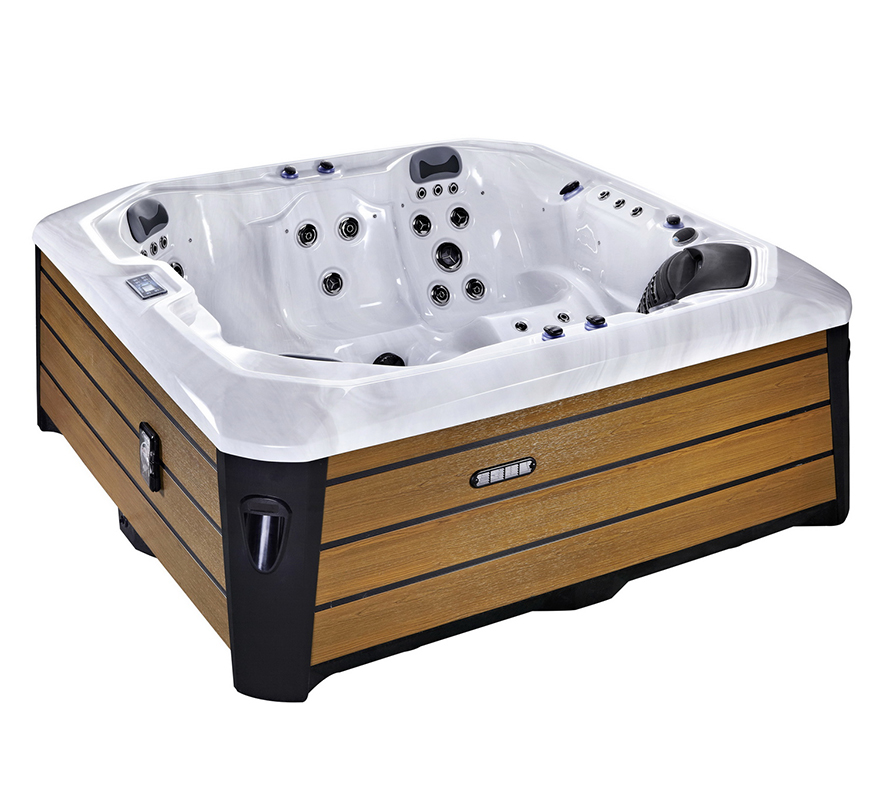
Caldera: comfortable curves and less-fuss soaking
Caldera sits near Hot Spring in the market, prioritizing comfort and set-and-forget ownership. The Utopia series feels like someone designed the seats for actual bodies, with soft edges that don’t cut into thighs, and jet patterns that relax rather than demand your attention. They use full foam, circulate well, and pair UV and ozone for clean water with light sanitizer touch.
They are not the most customizable. You won’t find endless accessory choices. You will find a tub that fills, heats, and keeps water easy without constant tweaking. If your dream night is quiet rain, dim lights, and a soak that fades your back pain without fireworks, Caldera fits.
Dealers often bundle steps, cover lifters, and basic chemicals. Negotiate for a better cover lifter if you have a tight deck. On energy, they test well, and long-term owners often report stable bills.
Marquis: strong therapy, American-made pride, and simple service
Marquis flies a little under the radar outside certain regions, which is a shame. Their therapy seats move water with purpose, and their control systems are no-nonsense. Build is sturdy, service access is good, and many parts are standard sizes you can replace without proprietary headaches. If you’re rural or like doing your own maintenance, that matters.
Their insulation is full foam on premium lines, and they have models tuned for hydrotherapy sessions rather than party seating. Water management is competent, with inline systems and optional ozone. Aesthetics skew functional, with clean lines rather than flashy cabinets. I’ve seen Marquis shells age well in harsh winters with few creaks and minimal cabinet fade.
The trade-off is fewer tech frills. If you want app control, multi-zone lighting, and a fountain display, look to others. If you want reliable heat and real pressure on sore muscles, keep them in the conversation.
Artesian: deep seats and power options that mean business
Artesian Spas builds some of the most powerful therapy tubs you can buy without crossing into commercial territory. Their Island and Elite lines offer pumps that don’t apologize, and seat designs that pin jets exactly where tense muscles live. If you value strong pressure without turbulence, Artesian usually delivers. The downside of power is noise, but they muffle vibration well when installed on a proper base.
Insulation on the better lines is solid, and they offer adjustable therapy controls that genuinely change the experience from seat to seat. Artesian often appeals to tall owners who find many loungers too short. Sit before you buy, because these seats are deep, and shorter folks may want booster cushions.
Service accessibility is decent, but read the warranty carefully. Artesian is straightforward, yet some sellers mix lines with different coverage, and the fine print matters at year three.
Nordic: the simple, reliable workhorses
Nordic makes round and open-bench designs that just work. If you want a tub for cold nights and conversation, and you don’t need a small city of jets, their models are honest and reasonably priced. Simpler plumbing means fewer leak points. Insulation varies by series, so check what you’re getting. In cold climates, choose the fully insulated version and a tight cover.
The seating is flexible, with no fussy sculpting that locks you into one posture. Jets are fewer, not weak. Families often like Nordic because kids can move around easily, and adults can sit at different depths as the water level changes with more people. If a dealer has a hot tub for sale in the Nordic line and you’re budget-minded but still want quality, take a soak and see if simple is your kind of luxury.
Master Spas: features galore with careful dealer selection
Master Spas offers broad catalogs, lots of features, and big marketing. Wet tests show therapy that ranges from very good on higher-end Twilight and Michael Phelps Signature lines to adequate on entry models. They sell many tubs at shows, which can mean aggressive pricing and fast decisions. That’s not a sin, but it puts more pressure on you to vet the dealer and warranty support.
On the plus side, their higher-end tubs move water with authority, and their insulation has improved in recent years. Water care systems with ozone and optional UV help, and they include useful touches like neck pillow jets that actually hit the right spot if you’re average height. The cabinet styling can be bold, which people either love or pass on.
If you consider Master Spas, insist on transparent warranty terms, ask about response times for service, and validate what “lifetime shell” means in practice. Owners with solid local dealers report good experiences. Owners without that support sometimes feel stuck.
Dimension One: refined hydrotherapy and smart filtration
Dimension One, often shortened to D1, punches above its recognition. Their Bay and Reflections series feature carefully tuned jets and contoured seats that don’t push you out when pumps rev up. Filtration is a strong suit. D1 pioneered some useful water management ideas, and their skimming and filtration pull more gunk on the first pass than many others.
Covers seal tight, insulation is full foam, and finishes hold up well outdoors. Their lounges are comfortable for an average-height adult and decent for taller soakers. They sometimes sit at a premium price without a household name, which makes negotiation easier. If you value water clarity and low day-to-day fuss, D1 belongs in your shortlist.
What price buys you at each tier
Hot tub pricing has as much to do with dealer margins and local competition as with BOM costs, so ranges are more honest than dollar-precise numbers. Under 6,000 dollars usually means fewer jets, smaller pumps, basic insulation, and simpler control panels. If the tub lives in a mild climate and you don’t need high-pressure therapy, you can still be happy here, especially with brands like Nordic or an entry model from a premium line.
In the 7,000 to 10,000 dollar band, you get better insulation, quieter pumps, two to three good therapy seats, and improved filtration. Most shoppers land here. The top layer at 11,000 to 16,000 dollars buys you advanced water care like salt or UV-plus-ozone combos, stronger frames, better covers, real hydrotherapy design, and often a dealer who answers your call quickly.
Then there’s the used market. A five-year-old premium tub, properly cared for, can outperform a new budget tub while costing less. Factor in new cover cost, possible pump replacement, and a fresh set of filters. If a private seller can’t show the tub hot and running, mentally set aside 1,000 to 1,500 dollars for surprises or walk away.
Energy use: the monthly bill that keeps speaking
People ask how much it costs to run a hot tub like they ask how much a truck costs to fuel. It depends on usage, climate, and the tub itself. A well-insulated 350 to 450-gallon spa, set around 101 to 103 degrees, running on 220V in a four-season climate, typically adds 20 to 50 dollars per month averaged across the year, with winter spikes. Poorly insulated tubs, flimsy covers, or lots of long soaks with the cover off can double that.
If you are math-inclined, look at pump horsepower and heater wattage, but remember the cover is king. A heavy, tight-fitting, tapered cover with intact vapor barrier can save you more than any app feature. Replace sagging covers every 3 to 5 years. Windbreaks help, and a simple privacy fence or even evergreen shrubs reduce heat loss on breezy nights.
Water care realities: chlorine, bromine, salt, ozone, UV
No system removes the need to pay attention. The best systems reduce how often you think about it. Chlorine is flexible and effective, slightly more odor-forward. Bromine is gentler on skin and holds up better at high temperatures, though tablets can leave crumbs if your feeder is low quality. Salt systems generate chlorine from salt in the water, so you still have chlorine, just dosed steadily. UV and ozone help by breaking down contaminants and reducing the sanitizer workload.
Here’s the ownership flavor. If you enjoy a five-minute ritual, chlorine with a good test kit is cheap and reliable. If you want minimal smell and less frequent additions, a salt system or bromine floater plus ozone is a pleasant balance. Keep pH between 7.2 and 7.8, alkalinity in the 80 to 120 range, and calcium hardness appropriate for your shell, often 150 to 250 ppm for acrylic. Drain and refill every 3 to 4 months for traditional systems, 4 to 6 months for salt with low bather load. If you use the tub daily and have a crowd on weekends, shorten those intervals by a month.

Where to buy: showroom, big-box, or secondhand
A showroom sale with a reputable dealer looks expensive until your first warranty call. Good dealers pre-deliver inspect, level, and wire coordination with your electrician, then support you when a sensor hiccups. That support is part of what you pay for. Big-box stores and online sellers will often undercut by thousands. If you can do your own minor repairs and you are patient with parts shipping, you can save real money. The risks are noise levels, heat retention, and service responsiveness.
For a used hot tub for sale on marketplace boards, I look for these tells. The equipment bay should be clean, not perfumed. Open the panel, run the pumps, listen for bearing rumble. Look for white crust on unions which hints at slow leaks. Ask about water chemistry habits, not just “we used chlorine.” If they say they drained it last month and it’s dry, insist on a wet test or budget for unknowns. A soft floor near the base means rot. Cosmetic cabinet panels are easy to replace; a rotten frame is a heart transplant.
Smart details that improve daily life
The best tubs rarely win on one headline feature. They add up a dozen small wins. I like headrests that remove for cleaning, not glued pillows that trap oils and discolor the shell. I like footwell space so you aren’t playing footsie with three adults unless that’s the plan. I like a proper cover lifter with gas shocks that fits your deck layout. I like exterior corners that don’t snag a cover seam during removal. I like stainless steel trims held by proper retainers, not adhesives that surrender after two summers.
Lighting should help you see steps in the dark rather than turn the yard into a nightclub. Bluetooth is fine, but I rarely recommend embedding speakers in the cabinet. Separate portable speakers work better and won’t force you to open the equipment bay when a woofer fails. A dedicated GFCI disconnect within sight of the tub is both code and convenience when you need to power cycle at 10 pm during a snow squall.
Brand match by personality
Some people want a therapy tool. Some want a backyard hearth. Some want hassle-free. If you prize precision hydrotherapy with seat variety, Sundance, Bullfrog, Artesian, and Marquis lead the conversation. If you emphasize quiet efficiency and minimal maintenance, Hot Spring and Caldera shine. If you want brand recognition and a very complete dealer network, Jacuzzi remains a safe harbor in the higher series. If budget and simplicity are paramount and you still want dependability, Nordic deserves a look. If you want lots of features with sharp pricing and you trust your local dealer, Master Spas and Dimension One can be very satisfying.
A quick, useful comparison list
- Therapy strength and design: Sundance, Bullfrog, Artesian, Marquis excel with true deep-tissue seats. Hot Spring and Caldera focus on balanced, relaxing therapy. Water care ease: Hot Spring’s salt system and Caldera’s UV-plus-ozone setups are standouts. D1’s filtration keeps water clear with less fuss. Efficiency and quiet: Hot Spring, Caldera, and Jacuzzi high-end models are strong. Bullfrog’s full-foam designs also hold heat well. Customization and serviceability: Bullfrog’s JetPaks and Marquis’ straightforward parts access make ownership flexible. Value tiers: Nordic and select entry models from premium brands in the midrange; Sundance, Jacuzzi J-300/400, Hot Spring Highlife, Caldera Utopia, Bullfrog A-series in the premium tier.
The day-one checklist before you sign
- Wet test the exact series or an equivalent in the lineup, especially if you’re under 5'6" or over 6'2". Seat depth and float are personal. Confirm insulation type, cover thickness and density, and whether a cover lifter is included. Ask to see the cover’s vapor barrier spec. Read the warranty aloud. Distinguish shell, surface, plumbing, parts, and labor terms. Ask which items are pro-rated. Ask your dealer who handles service. Is it in-house or third-party, and what is the average response time in your zip code? Review delivery logistics. Measure gate width, slope, steps, and electrical run. Budget for a proper concrete pad or pavers that won’t settle.
A few real-world scenarios
A family of four in Minnesota wants winter soaking without a power bill shock. They choose a Hot Spring Highlife, add a windbreak fence, and buy a heavy tapered cover with a good lifter. Their bill rises about 35 to 45 dollars in January. They use the FreshWater system and test weekly. After one winter, they would buy it again.
A couple in Arizona wants strong foot and lower-back therapy with flexible seats for friends. They buy a Bullfrog A-series with two JetPaks targeting glutes and calves. They rearrange packs twice in the first year and settle on a favorite layout. With mild winters, their energy cost is modest. They appreciate the composite frame when a monsoon soaks the patio and critters look for shelter elsewhere.
A tall runner with chronic hamstring tightness wants pressure and space. They pick an Artesian Elite with deep seats and a powerful footwell dome. Noise is noticeable on high speed, but therapy time becomes part of the training week. They buy ear-level pillows and a separate portable speaker for calmer evenings.

The honest bottom line
Ignore jet counts. Sit in the tub. Look for insulation that isn’t an afterthought. Choose a dealer who answers the phone with a technician’s name, not a call center script. Make peace with simple water testing, even if you buy salt. If you’re patient, the right hot tub for sale will match your body, your climate, and your habits, not just your budget. The first month will teach you a rhythm: pop the cover, hit the circulation, adjust sanitizer, skim, soak, and close it up tight. The second month will show you whether the brand you chose thought through the small things.
A good hot tub pays rent every week. It pulls your shoulders down from your ears, gives your friends a reason to stay, and makes cold nights feel like a luxury. Buy the one that you’ll look forward to using on the quiet Tuesday, not just the glamorous Saturday. That’s where the value is.